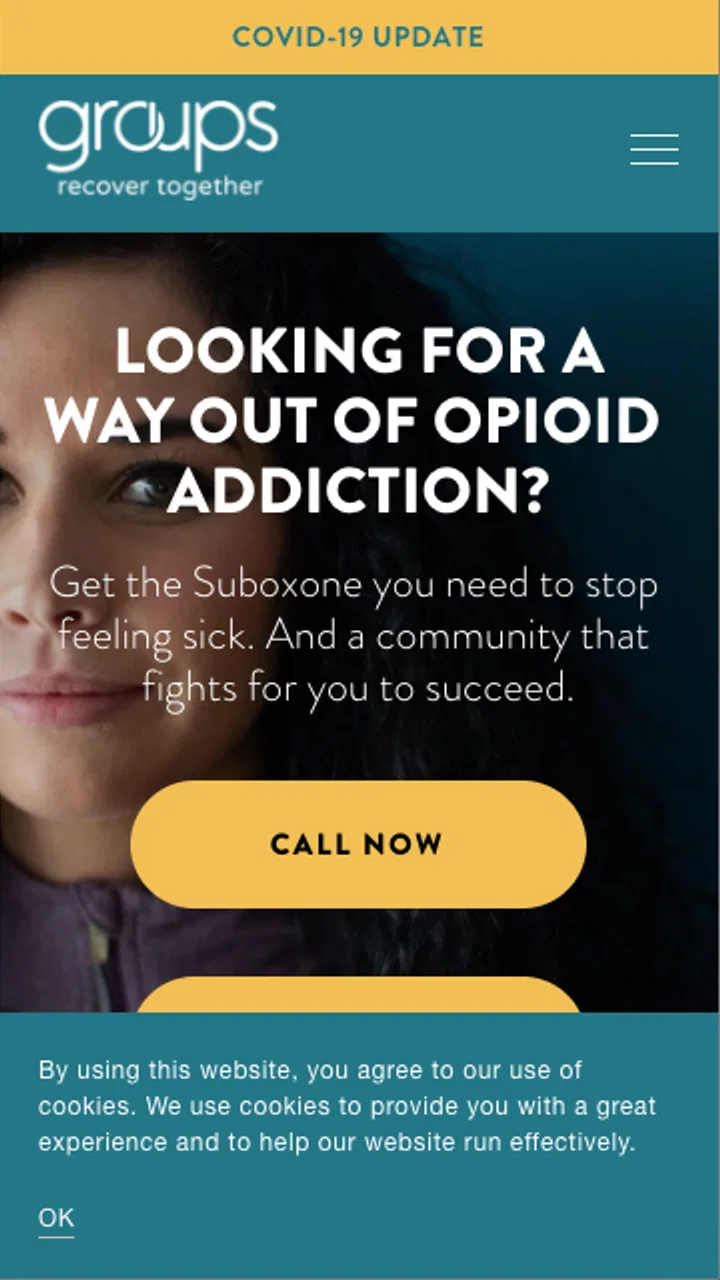
Groups Recover Together
- 4.5
- Rating
- 100.00K
- Installs
- Free
- Price

 Analysis by App-foxy
When an app deals with opioid addiction treatment, trust is not a decorative extra. It affects whether someone feels comfortable opening the app, returning to it during a difficult day, or recommending it to a family member. I approached Groups Recover Together with that in mind. It is a free medical app from Groups Recover Together, aimed at people connected with opioid addiction treatment rather than casual wellness or general habit tracking.
My overall impression is that its value comes from making treatment feel more reachable and less intimidating. The store message focuses on reducing shame and fear, and that purpose gives the app a very different tone from medication reminders, symptom journals, or anonymous recovery forums. At the same time, I would not treat it as a complete replacement for professional care, emergency help, or a private conversation with a clinician. It works best as part of a treatment relationship, not as a stand-alone answer.
The app is available at no cost and is rated for Everyone, which lowers the barrier for someone who may already be hesitant about asking for help. It has an average rating of 4.5 from around 1.6 thousand ratings, with more than 100 thousand installs. Those figures suggest that it has reached a meaningful audience, but they do not tell me whether it will suit every treatment situation. The important question is how comfortably a particular person can use it and what they expect it to do.
You May Also Like

 Blood Strike: 2.5 Anniversary
Blood Strike’s Loadouts Turn Every Drop Into a Tactical Gamble
A close look at Blood Strike’s custom loadouts: how fast access to signature weapons reshapes its battle royale rhythm, rewards preparation, and narrows the gap between fights.

 Pandora - Music & Podcasts
Pandora’s Music Is Easy to Start, but Harder to Recover
Pandora’s strength is its low-effort path from a seed to a station. Its weak spot is how much confidence it asks you to place in connection, setup, and quiet recovery.

 8 Ball Pool
 Is Built on Rivalries, Rematches, and Routine
A close look at the rivalries, rematches, shared routines, and unanswered safety questions that turn a quick pool match into a persistent mobile community.

 Samsung Music
’s Quiet Strength Is Playing What You Already Own
Its reach comes less from spectacle than from dependable access to a personal library. That simplicity is both the app’s strongest retention engine and its ceiling.

 AccuWeather: Weather Radar
AccuWeather Review: A Quick, Clear Forecast for Everyday Decisions
For everyday plans, the best forecast is the one you can understand quickly. AccuWeather makes rain timing, radar, and local conditions easy to act on, with a few trade-offs.

 Hill Climb Racing
Why Hill Climb Racing Still Turns Crashes Into One More Run
A tiny car, a bumpy hill and one more upgrade: Hill Climb Racing keeps resurfacing because its simple chaos makes every near-miss feel personal.
More From Our News Desk



Trust starts with knowing what role the app plays
I would start this section by separating what the app can help with from what still needs a person’s judgment. That distinction makes it easier to decide whether it belongs in your routine, rather than expecting one tool to handle every part of recovery. Once its role feels clear, the next useful step is to look at the everyday choices that shape how safely and comfortably you use it.
A medical companion rather than a general recovery tracker
The first useful distinction is between this app and ordinary recovery tools. A general habit app may ask you to record cravings, count sober days, or set reminders. A forum may offer peer discussion. A telehealth service may focus on appointments. Groups Recover Together sits closer to organized opioid addiction treatment, so I would approach it as a channel connected to care rather than as a private diary with a medical label.
That distinction matters because the most sensitive moments are often practical ones: deciding whether to engage with treatment, trying to stay connected when motivation is low, or working out what to do before a difficult appointment. An app in this setting can reduce friction, but it cannot make a clinical decision on the user’s behalf. I found that a healthier expectation is to use it to support participation and communication, while keeping urgent medical questions in the hands of qualified professionals.
Someone who wants a simple mood tracker may find the app too specialized. On the other hand, a person already involved with Groups Recover Together may find a dedicated treatment app more relevant than a generic tracker because its purpose is narrower. The choice is less about having the largest feature set and more about whether the app matches the user’s existing care pathway.
What the developer and app history tell me
The developer is Groups Recover Together, which gives the product a direct connection to the organization named in the app itself. It was released on March 24, 2021, and the current version is 1.8.2. It supports Android 7.0 and later, so people using older phones may still be able to install it without needing a recent device.
I see the relatively broad device support as a practical advantage in this category. Treatment should not assume that everyone has a new phone or a large amount of storage available. Still, users should keep the app updated when possible, especially with a medical service, because updates can affect compatibility, reliability, and how account-related screens work. I would also avoid relying on an app alone for time-critical information simply because an older phone can run it.
The visible rating is encouraging, but I would read it as a sign of general usefulness rather than proof of clinical quality for a specific person. Reviews can reflect installation, access, usability, or a particular treatment experience. They cannot replace a conversation about whether this service is appropriate for someone’s needs, location, medication plan, or level of support.
Permissions and account decisions deserve attention
Trust is easier to judge when an app explains what it needs and lets the user make understandable choices. With a treatment-related app, I would pay close attention during setup instead of tapping through every screen automatically. If the app asks for access to a phone function, notification, or account detail, I would consider whether that request makes sense for the task I am trying to complete.
I also recommend checking the operating system’s permission controls after installation. This is not a sign that the app is unsafe; it is simply good practice for any medical tool. Permissions can be reviewed and adjusted at the device level, while notifications can normally be managed separately. If changing a permission prevents an important part of the service from working, that trade-off should be clear before the user depends on the app.
Account control is just as important as permission control. I would use a strong, unique password where one is required, protect the phone with a screen lock, and avoid leaving an active treatment account open on a shared device. These steps are especially relevant if family members, roommates, or coworkers might occasionally use the same phone. A free app can still involve information that deserves careful handling.
How I would handle sensitive information
I would avoid entering more personal detail than the app genuinely needs for its purpose. In addiction treatment, even ordinary-looking information can feel highly sensitive when combined with an identity, contact details, appointment context, or treatment history. My approach would be to read each prompt, answer accurately where necessary, and pause when a field seems optional or unclear.
I would also review the app’s privacy and account screens before using it regularly, rather than assuming that a medical category automatically explains every data practice. The useful questions are practical: What information is requested during setup? Which choices can be changed later? How are notifications worded on a locked screen? Is there a clear way to sign out or manage the account? These checks help the user decide how much privacy they have in everyday situations.
Notifications deserve special care. A phone may be visible on a desk, in a car, or at home with other people nearby. A discreet notification setting can reduce accidental disclosure, while a completely disabled notification may make it easier to miss something important. I would choose the least revealing setting that still supports the way I plan to use the app, then test it with the phone locked.
A realistic day with the app
Imagine someone who is already receiving treatment through Groups Recover Together and has a busy morning before work. They may not want to search through email, remember several separate services, or explain their situation repeatedly. Opening the dedicated app could give them a more direct place to engage with the treatment process. The useful benefit in that moment is not entertainment or a streak; it is reducing the number of steps between the person and the care they are trying to maintain.
That same scenario shows why I would prepare before a stressful day. I would sign in while calm, review how notifications appear, confirm that the account details are correct, and make sure I know where to find the relevant action. A person dealing with cravings, anxiety, or a packed schedule should not have to discover basic navigation for the first time under pressure.
If the app becomes inaccessible, I would not wait indefinitely for it to recover when the matter is urgent. I would use the established treatment contact or emergency services appropriate to the situation. This is one of the most important boundaries: an app can make routine engagement easier, but it should not become the only route to immediate help.
Where user agency is strongest
The app’s free price is a meaningful form of access. Someone can try it without adding a purchase decision to an already stressful treatment decision. The Everyone age rating also makes the entry point less restrictive, although the subject matter is serious and younger users should still have suitable adult or professional support when appropriate.
User agency also comes from choosing how the app fits into a wider routine. I would decide whether to use it only for treatment-related tasks or keep it available for more frequent check-ins, depending on what the care team expects. I would not turn every notification into an obligation or judge recovery by app activity. A tool is helpful when it supports a person’s plan, not when it creates another source of guilt.
There is a subtle trade-off here. A specialized app can make treatment feel more organized, but it may also concentrate sensitive information in one place. A person who shares a phone or worries about being identified may prefer stricter notification settings and more deliberate sign-out habits. Someone who struggles with remembering appointments may reasonably choose convenience instead. Neither choice is universally correct; the right balance depends on the user’s environment.
Comparison with the usual alternatives
Compared with a paper notebook, this app may be more convenient for someone who already interacts with Groups Recover Together digitally. A notebook offers strong offline privacy and complete control over what is written, but it cannot provide the same direct connection to an organization’s treatment workflow. I would choose paper when privacy from devices is the priority, and the app when reducing administrative friction matters more.
Compared with a generic recovery app, Groups Recover Together is more focused. A general app may offer broader journaling, motivational tools, or customizable tracking, but its content may not fit opioid addiction treatment specifically. I would choose a general tracker for personal reflection alongside care, not instead of a treatment-connected tool. The specialized option is preferable when the user’s main goal is staying engaged with this particular provider.
Compared with a peer-support forum, the app is likely to feel more structured and less dependent on public conversation. A forum can provide a sense of community, but it may also expose users to advice that is not appropriate for their medical situation. I would not use anonymous posts to settle medication or crisis questions. The dedicated treatment app has a clearer place in the care journey, while peer spaces serve a different emotional and social purpose.
Compared with calling an office, an app can be less intimidating for routine interaction. That convenience is useful for someone who feels shame about asking for help. Yet a phone call remains better when the situation is complicated, urgent, or difficult to explain through a screen. I would treat the app as one communication route, not as a reason to avoid human contact when human judgment is needed.
Who will benefit most, and who should skip it
I think the strongest fit is a person who is already connected with Groups Recover Together, wants a lower-friction way to stay involved, and is comfortable managing a treatment account on a smartphone. It may also suit a family member or support person who is helping someone build a dependable routine, provided the person receiving treatment remains in control of their own account and privacy choices.
I would be more cautious if someone is looking for instant crisis intervention, a diagnosis, medication instructions, or a substitute for a clinician. The app is also not my first recommendation for someone who does not want any digital treatment channel, shares a phone without reliable privacy, or has limited internet access and no dependable alternative. In those cases, a direct provider contact or offline plan may be more appropriate.
People who are uncomfortable with account setup should not feel pressured to use the app without support. A trusted staff member can help explain the intended workflow, while the user should still enter their own credentials and decide which device settings feel safe. That combination preserves convenience without handing over control of a sensitive account.
My cautious verdict
After looking at the app through the lens of trust, I see a focused medical tool with a clear purpose: helping make opioid addiction treatment feel less frightening and less burdened by shame. Its free access, broad Android compatibility, and connection to Groups Recover Together make it worth considering for people already within that care network. The audience size and 4.5 average also suggest that many users find it useful, though I would still judge it against my own privacy needs and treatment routine.
My recommendation comes with a simple condition: use it deliberately. Review permissions, control lock-screen notifications, protect the account, and decide in advance what you will do if the app is unavailable. Those habits are not obstacles to recovery; they are ways of keeping the technology in its proper place.
Groups Recover Together is most convincing as a bridge to ongoing care, not as care by itself. If that is the role you need, I think it is a sensible app to try. If you need emergency support, broad self-tracking, anonymous community discussion, or a fully offline method, another option may serve you better. For the right user, its greatest strength is not a flashy feature but the possibility of making one difficult step—staying connected to treatment—feel a little more manageable.
FAQs for Groups Recover Together
01What is Groups Recover Together, and who is it designed for?
Groups Recover Together is a recovery support program for people working to overcome opioid addiction. It combines medication-assisted treatment, typically using buprenorphine when prescribed by a qualified clinician, with virtual group counseling and ongoing care coordination. The service is intended for eligible adults who want structured support, medical guidance, and connection with peers during recovery. Availability and eligibility can vary by location.
02How does treatment through Groups Recover Together work?
After completing an initial assessment, eligible members generally receive an individualized treatment plan that may include prescribed medication, counseling, recovery coaching, and regular virtual group sessions. The program emphasizes accountability and peer support rather than relying only on medication. Clinicians monitor progress and may adjust care over time. Exact appointment schedules, services, and treatment requirements depend on your needs and local program availability.
03Can I use Groups Recover Together from home?
Groups Recover Together offers virtual recovery services in many areas, allowing members to attend group meetings and communicate with care professionals remotely. However, remote access does not necessarily mean every part of treatment can be completed entirely online. An initial evaluation, identity verification, medication arrangements, laboratory testing, or occasional in-person services may be required. Check current state and local requirements before enrolling or downloading the app.
04Is Groups Recover Together covered by insurance, and what does it cost?
The cost of Groups Recover Together depends on your insurance plan, location, eligibility, and the specific services included in your treatment plan. The program may work with commercial insurance and certain public health coverage options, while self-pay availability can differ. Before beginning treatment, ask the provider about copays, deductibles, medication costs, laboratory fees, and any charges for services not included in your coverage.
05Is Groups Recover Together a replacement for emergency or crisis care?
No. Groups Recover Together is designed for ongoing addiction treatment and recovery support, not for emergencies. If you or someone else has taken an opioid and is difficult to wake, breathing slowly, or showing signs of overdose, call emergency services immediately and administer naloxone if available. For severe withdrawal, suicidal thoughts, or another urgent medical concern, seek emergency care rather than waiting for an app response or scheduled session.
Pros
- Peer support from people facing similar recovery challenges.
- Structured meetings help users build consistent recovery habits.
- Support is available through a convenient mobile format.
- Progress tools can encourage accountability between meetings.
- May reduce isolation during the recovery process.
Cons
- Availability may depend on location and program eligibility.
- Some users may prefer private
- one-to-one counseling.
- Regular participation can require a significant time commitment.
- App features may be less useful without an active recovery group.
- Sharing personal experiences in groups may feel uncomfortable for some users.

Groups Recover Together
Gallery